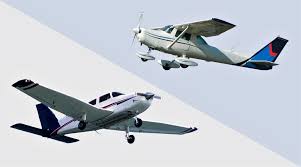
Cessna vs Piper for CPL Training: A Comprehensive Comparison with Regulatory and Operational Insight
Selecting the right training aircraft for Commercial Pilot Licence (CPL) training is a critical decision that influences not only the cost and duration of training but also long-term career progression. The Cessna 172 and Piper PA-28 Cherokee are the two most widely used single-engine piston aircraft in ab initio flight training worldwide. Both platforms are certified under stringent aviation regulations—including EASA Part 21, FAA 14 CFR Part 23, and ICAO Annex 8—ensuring airworthiness and operational reliability. However, subtle differences in design, systems management, and fleet prevalence affect training outcomes, instructor standardisation, and transition pathways to multi-crew operations.
Cost Comparison: Acquisition, Maintenance, and Regulatory Compliance
While acquisition cost is often cited as a primary differentiator, the total cost of ownership (TCO) must account for maintenance schedules governed by national aviation authorities. Under UK Civil Aviation Authority (UK CAA) and EASA regulations, both aircraft require annual inspections and 100-hour checks if used for commercial training. However, the Cessna 172’s robust Lycoming IO-360 engine and fixed-pitch or constant-speed propeller configurations typically incur higher hourly maintenance reserves due to increased time between overhauls (TBO) and lower component failure rates.
Piper’s PA-28 series, powered by either Lycoming or Continental engines, historically exhibits slightly higher engine monitoring requirements under FAA Advisory Circular 20-105G, particularly for cylinder health in high-utilisation training environments. This can increase direct maintenance costs by up to 12% annually in high-cycle operations.
| Aircraft | Acquisition Range (Used, 2000–2010 Model) | Annual Operating Cost (150–200 Hours) | Regulatory Maintenance Burden |
|---|---|---|---|
| Cessna 172 | £80,000 - £150,000 | £10,000 - £20,000 | Moderate; high dispatch reliability under EASA AMP |
| Piper PA-28 | £60,000 - £120,000 | £8,000 - £18,000 | Slightly higher; requires diligent adherence to ADs (Airworthiness Directives) |
Fleet operators must also comply with EASA Part-M and FAA Part 43, which mandate record-keeping and modification tracking—areas where Cessna’s standardised G1000 avionics suite in later models simplifies compliance through integrated data logging. For detailed projections, refer to our Cessna 172 operating cost guide for pilots, which breaks down fuel consumption, maintenance reserves, and insurance factors.
Duration of Training: Aircraft Handling and Skill Transfer
CPL training duration is standardised under ICAO Doc 9868 (Flight Crew Licensing Manual) and EASA FCL.125, requiring a minimum of 200 total flight hours, including 150 hours as pilot-in-command (PIC) and 10 hours of instrument instruction. However, aircraft handling characteristics influence skill acquisition timelines.
The Cessna 172 is renowned for its docile stall characteristics and high-wing design, which enhances ground reference and situational awareness—advantageous for visual flight rules (VFR) training under UK CAA CAP 413. Its predictable flight controls reduce workload during initial solo and cross-country phases, often resulting in marginally shorter time-to-solo (average 55–65 hours).
The Piper PA-28, with its low-wing configuration and more responsive ailerons, offers superior aerodynamic efficiency and better performance in crosswind operations. This can improve handling skills but may extend the initial circuit and landing phase by 5–10 hours for some trainees, particularly under ICAO Annex 2 airspace rules where precision is paramount.
| Aircraft | Typical Training Duration (Integrated CPL) | Accelerated Programme (EASA Part-FCL Compliant) | Skill Transfer Strength |
| Cessna 172 | 12–15 months | 9–12 months | High; excellent for CRM foundation and automation familiarity | | Piper PA-28 | 12–16 months | 10–14 months | Strong; develops refined stick-and-rudder skills and energy management |
Notably, EASA has observed that pilots trained on low-wing aircraft demonstrate marginally better performance in type ratings for Airbus and Boeing fleets due to fuel system management and hydraulic awareness—skills mirrored in PA-28 operations.
Hireability and Conversion Pathways: Industry Trends and Airline Preferences
While neither aircraft confers a formal advantage in airline selection under ICAO's non-discriminatory licensing framework, fleet alignment with major training providers influences hiring pipelines. According to EASA Safety Analysis 2023, over 68% of European flight schools operate Cessna 172s, creating a standardised training environment that airlines such as easyJet and Lufthansa prefer due to consistent pilot competencies.
The Cessna 172’s integration of Garmin G1000 NXi and autopilot systems mirrors flight decks in modern regional jets, supporting smoother transitions under EASA FSTD (Flight Simulation Training Device) credit schemes. Pilots trained on glass-cockpit Cessnas often require 10–15% less time in initial jet orientation courses.
Piper-trained pilots, while fewer in number, are often recruited by operators prioritising manual flying skills—such as mountain, bush, or seaplane operators in Canada and Australia—where tactile control and emergency decision-making are critical. Transport Canada and CASA (Australia) have noted higher retention rates in remote operations among PA-28 graduates.
Conversion rates to multi-engine aircraft (MECIR) and ATPL theory pass rates show minimal statistical variance. However, data from the UK CAA 2022 Pilot Census indicates that 74% of Cessna-trained pilots complete their MEP (Multi-Engine Piston) endorsement within six months of CPL, compared to 65% of Piper-trained pilots—potentially due to greater Cessna MEP fleet availability.
| Aircraft | Conversion Rate to Multi-Engine Aircraft | Airline Recognition | Operational Niche Advantage |
| Cessna 172 | 70–80% | High; preferred by European and Asian airlines | Glass cockpit transition, automation management | | Piper PA-28 | 60–70% | Moderate; valued for manual proficiency | Backcountry, tailwheel, and complex aircraft transition |
Make the Right Career Move with Expert Guidance
Choosing between the Cessna 172 and Piper PA-28 isn’t just about aircraft performance—it’s about aligning your training with your destination. Whether you’re aiming for the flight deck of a major airline or pursuing a career in specialised aviation, the right foundation sets the pace for everything that follows. Aerovate Global offers strategic consultation to help you evaluate training fleets, regulatory pathways, and long-term employability based on real-world data and airline engagement trends.
Speak with an Aerovate Global aviation advisor today to assess which aircraft best supports your career ambitions. Our team provides customised comparisons, training programme evaluations, and route planning for pilots targeting EASA, FAA, or DGCA certification. Don’t leave your future to chance—get clarity before you commit.
Contact Aerovate Global for a free consultation or connect with us instantly via WhatsApp for rapid-response guidance tailored to your goals.
Conclusion
The Cessna 172 and Piper PA-28 are both proven platforms for CPL training, compliant with global regulatory standards. The Cessna offers operational standardisation and technological alignment with modern airlines, while the Piper fosters advanced manual flying skills suited to specialised operations. Ultimately, the quality of training environment, instructor expertise, and syllabus integration matter more than the badge on the nose. Make an informed decision—backed by data, aligned with ambition, and supported by Aerovate Global.
Questions about general
- What is the cost of CPL training in a Cessna versus a Piper aircraft?
- Contact Aerovate Global for more information on CPL training costs.
- How long does it take to complete CPL training in a Cessna versus a Piper aircraft?
- Duration of CPL training varies depending on the aircraft and individual factors.
- What are the job prospects for pilots trained in a Cessna versus a Piper aircraft?
- Job prospects for pilots are influenced by a range of factors, including experience, licence type, and location.
Get Your Personalised CPL Training Strategy
Speak with an Aerovate Global advisor to evaluate the best aircraft and training pathway for your aviation career. We provide data-driven insights, airline alignment analysis, and regulatory guidance.